
Proprioception Lesson: Pelvic Tilting
Proprioception Lesson: Pelvic Tilting
Pelvic Tilts are involved in a majority of the movements we partake in day to day. Whenever we sit, stand, walk, or move our lower body in any way, some form of pelvic tilting will occur. Most people who have taken a yoga or pilates class have heard the terms Anterior Tilt and Posterior Tilt. Unfortunately, these tilts are rarely taught to the extent that they need to be. This Proprioception Lesson will move to reteach these tilts and allow their application into the body’s proprioceptive programming.
Anterior Tilt:
Anterior tilt is the tilt in which the lumbar (low back) arches, creating greater lumbar curve. Most people will only feel their lumbar muscles shortening when tilting anteriorly, usually creating discomfort or pain. The reason for this discomfort or pain is the fact that this isn’t proper anterior tilt. A tilt refers to the fact that the pelvis is being acted upon by two forces pulling in opposite directions. When the lumbar muscles are the only engaged muscles, it doesn’t tilt the pelvis, but rather jams/dumps it forward.
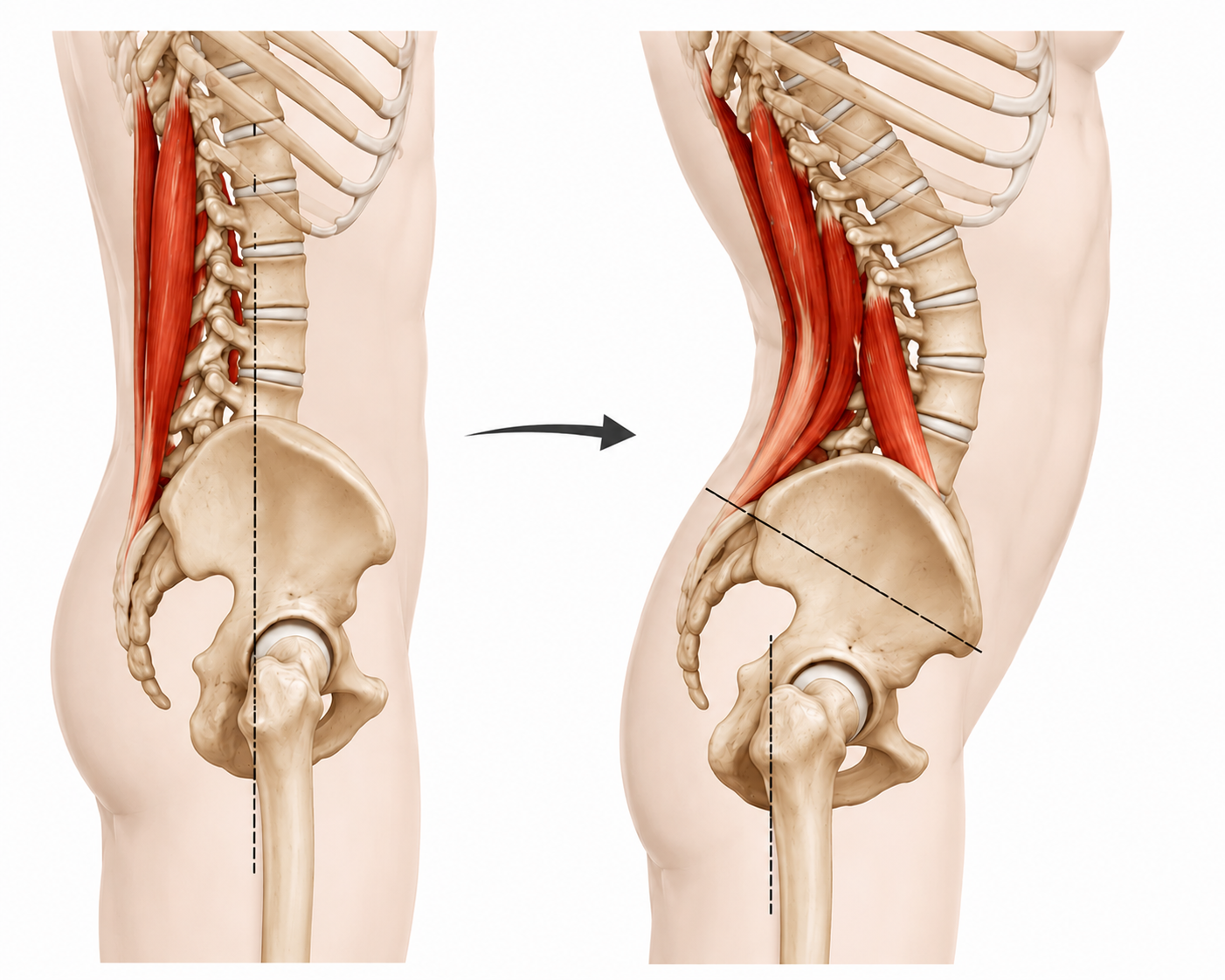
Anterior Jamming/Dumping
So in order to fix this, force within the anterior (front) of the pelvis must contract in the opposite direction of the lumbar muscles. The anterior muscles that are used to make this happen are the rectus femoris (quad muscle), TFL, and the Sartorius Muscle. As the lumbar pulls the posterior pelvis towards the head, the anterior muscles of this tilt must pull the anterior pelvis towards the knees.
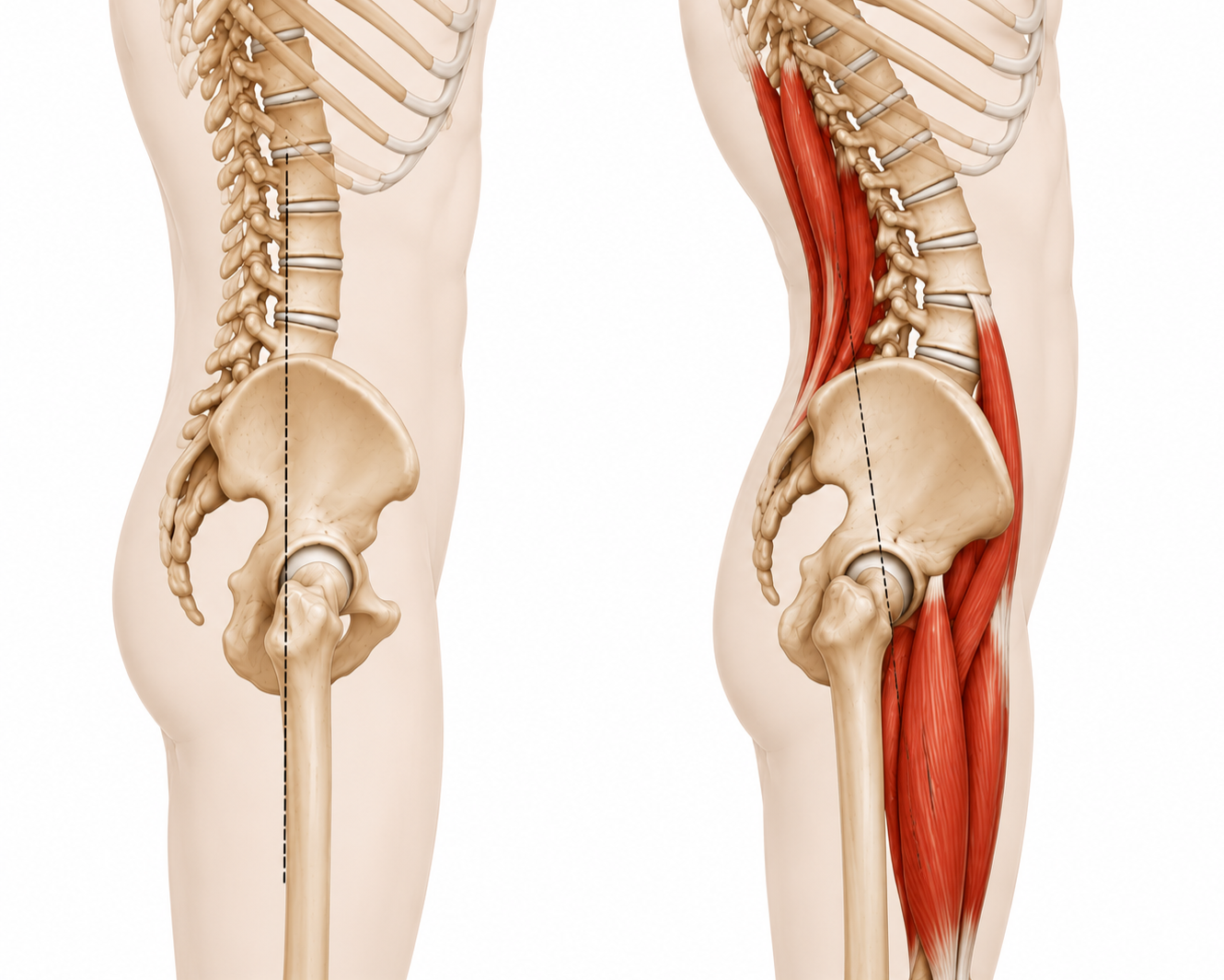
Proper Anterior Tilt
A Que-Based Exercise will allow the anterior muscles to learn how to accomplish their task in this tilt. Sit with feet flat on the floor and knees at 90 degrees. Arch the lumbar spine, press the feet away activating the anterior muscles, and then allow the anterior muscles to shorten pulling the anterior pelvis towards the knees. As these muscles shorten, allow the lumbar muscles to slightly disengage which allows for the engagement of this position to be split equally between the lumbar muscles and anterior muscles.
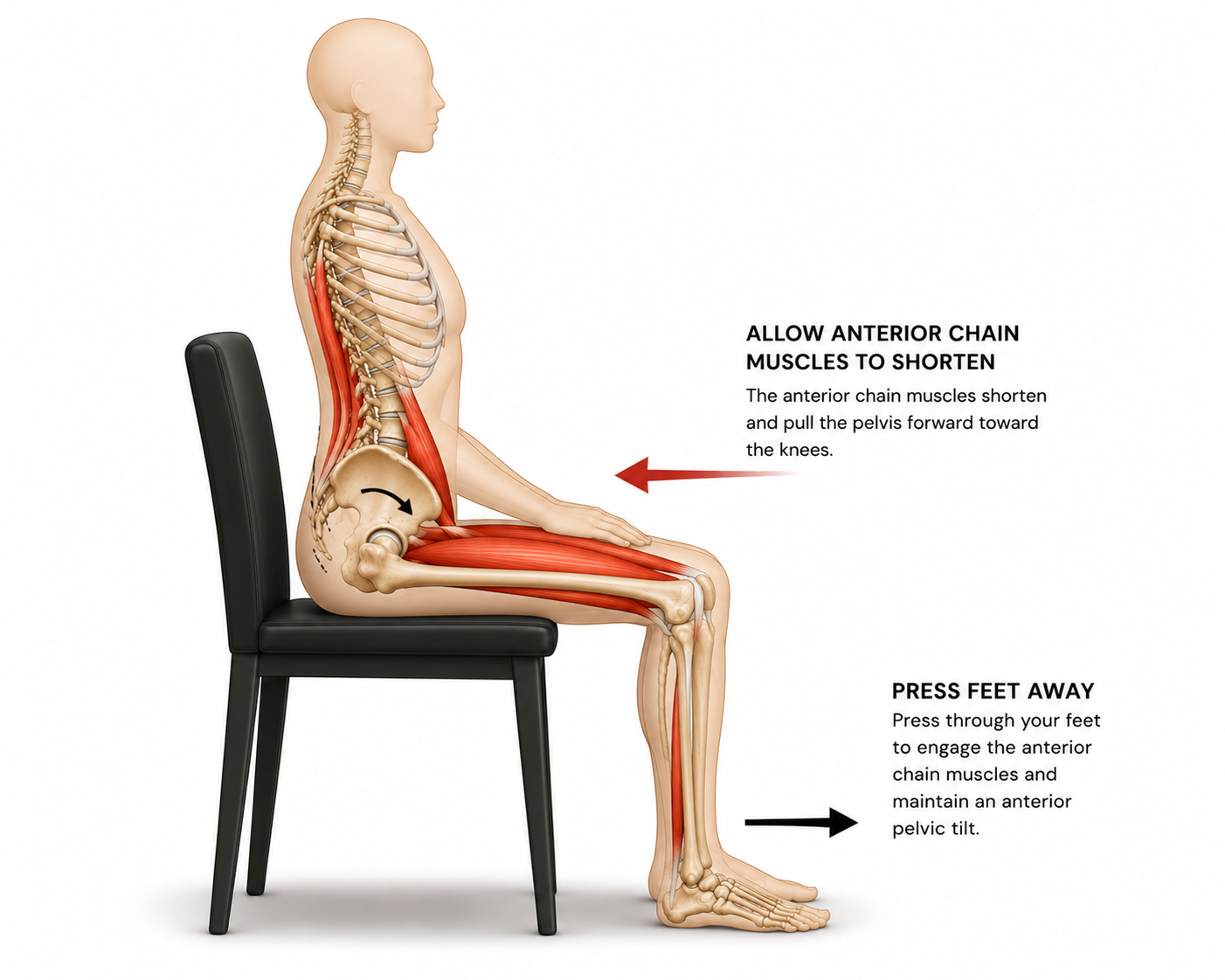
Que-Based Exercise for Anterior Chain Engagement
This is a healthy anterior tilt and is absolutely a viable option for good posture, as long as it is a tilt and not a forward jam/dump only engaging the lumbar muscles.
Posterior Tilt:
Posterior tilt flattens the lumbar spine, decreasing lumbar curve and is referred to normally as “tucking the pelvis”. When people “tuck” their pelvis, they can feel that the abdominal muscles and deeper hip flexors (psoas and iliacus) are the sole engaged muscles. However, this leads to a slumped posture and seems wrong. That is because this isn’t the proper posterior tilt, but again, rather a jam/dump of the pelvis backwards.
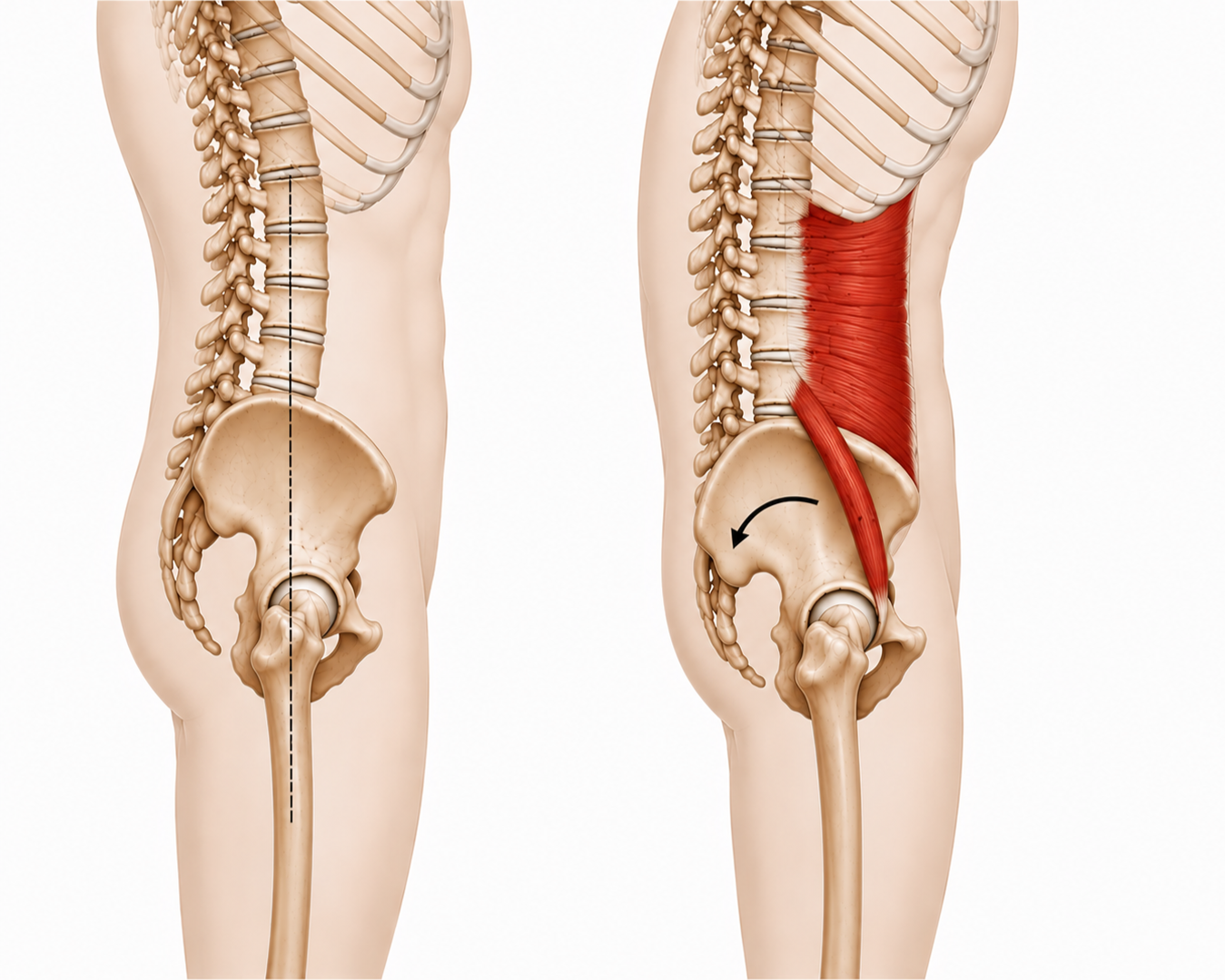
Posterior Jamming/Dumping
In order to form this into a tilt, the posterior chain has to engage. Starting in a tucked position engaging the abdominal muscles and deeper hip flexors to enter that slumped posture, engage the glutes, then pull on the heels to engage the hamstrings, and finally allow these posterior chain muscles to shorten, pulling the posterior pelvis towards the back of the knees. The lumbar spine should feel stretched out when this tilt is done properly. This is the proper posterior tilt position and, again, this is an option for posture as long as the pelvis isn’t jamming/dumping backwards.
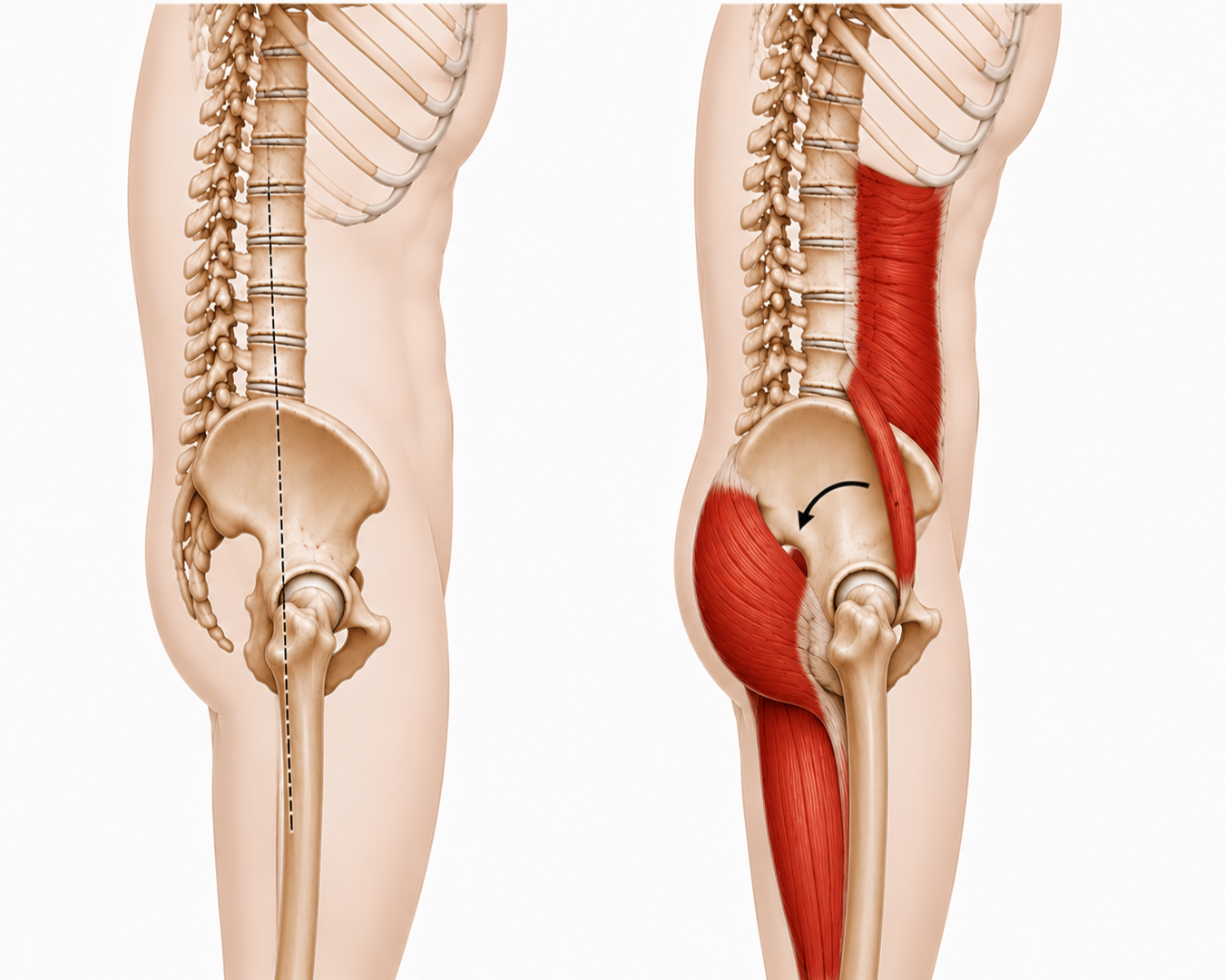
Proper Posterior Tilt
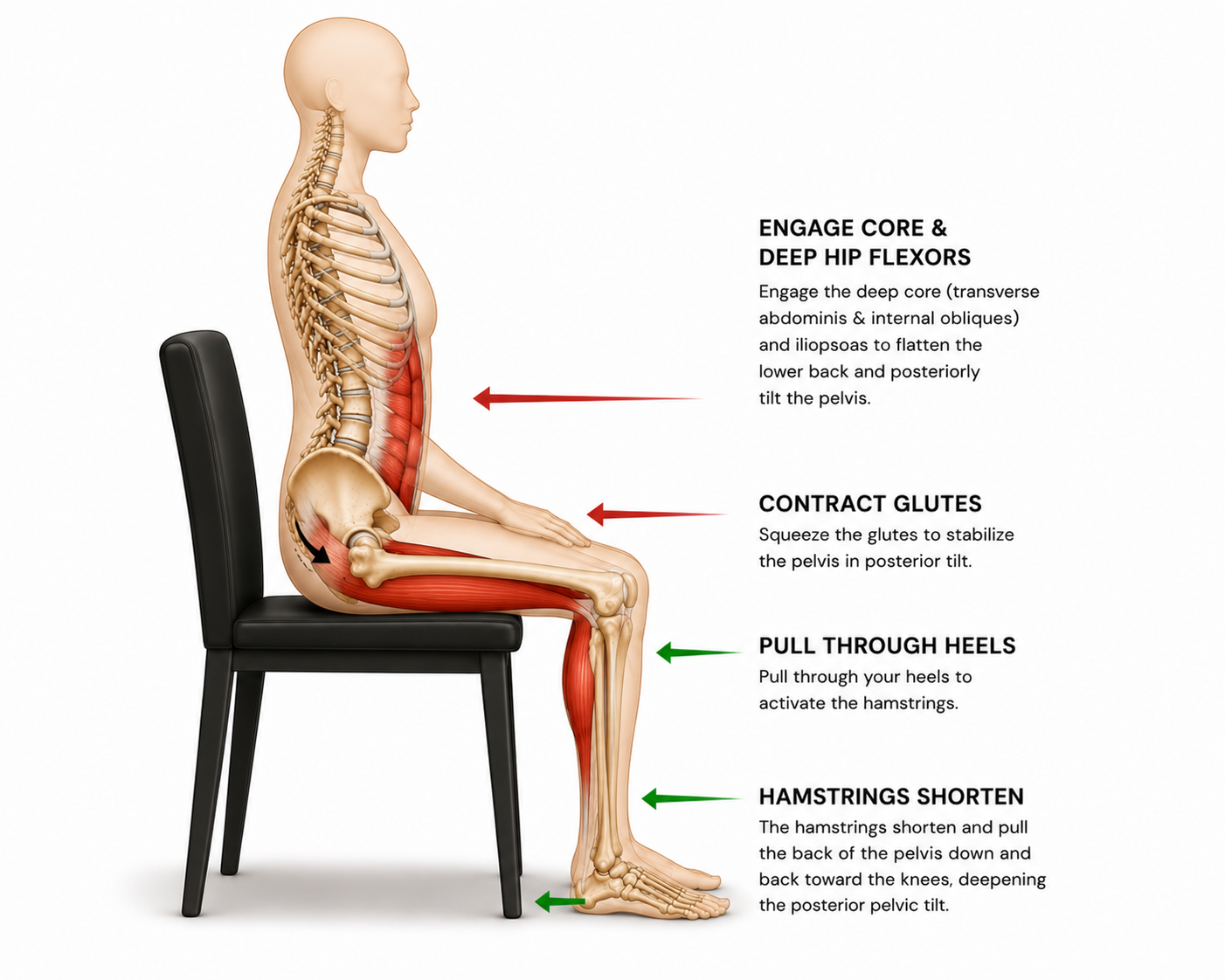
Que-Based Exercise for Posterior Chain Engagement
Finding Neutral:
Now these two tilts are great diametric tilts and are considered good posture positions, however neutral hips is where the least strain is found. Neutral hips is not letting the hips go where they necessarily feel natural as a person’s “natural” position might be more anterior or posterior. Neutral hips is the position where the anterior tilt and posterior tilt muscles work in tandem to find balance. The best way to learn this position, is to start in the least natural tilt. For example, for someone whose natural position is anterior dump, they would start in posterior tilt. From here add the opposite tilt muscles back in until everything is engaging evenly to create neutral hips. This is the third viable option for posture within pelvic tilts.
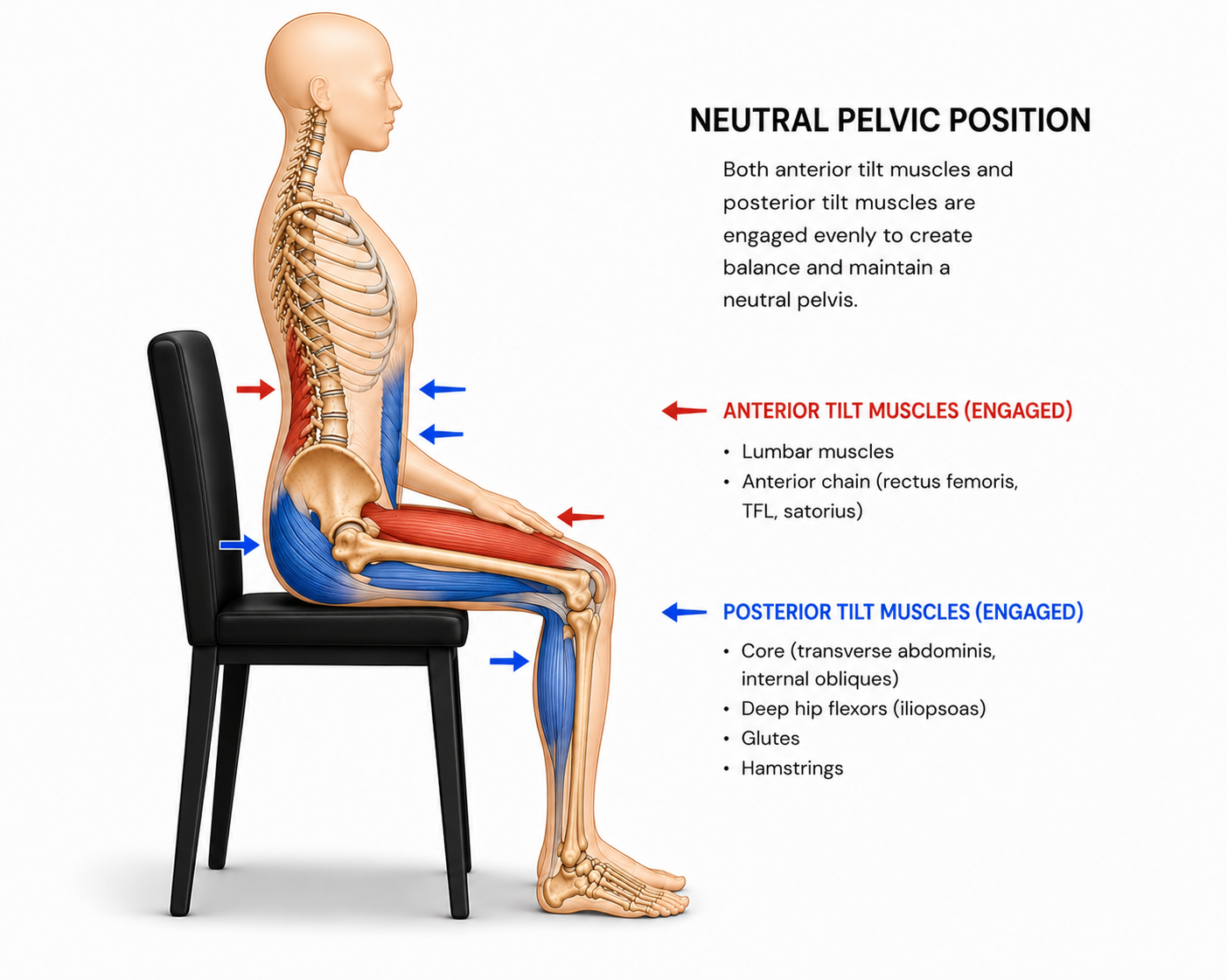
Neutral Pelvis
Symptoms of Jamming/Dumping the Pelvis:
When jamming/dumping the pelvis, muscles are thrown into either shortened or overextended states, and hyperreactive and underreactive states.
Common symptoms of an anterior jam/dump are shortened hyperreactive lumbar muscles (basically a really tight low back with the ability to easily spasm), shortened hypereactive or underreactive anterior muscles such as the quad muscles, TFL, and Sartorius (which can lead to knee strain/damage causing pain), overextended hyperreactive or underreactive glutes and/or hamstrings (chronic glute and/or hamstring tightness and volatility), overextended hypereactive deep hip flexors (chronic deep hip flexor tightness and volatility) and, because of the body weight distribution, overextended hyperreactive calves (chronic calf tightness and volatility).
Common symptoms of a posterior jam/dump are overextended hypereactive or underreactive lumbar muscles (spasming lumbar muscles and/or weak lumbar muscles), shortened overreactive glutes and/or hamstrings (tight glutes and/or hamstrings), overextended anterior muscles (tight and volatile anterior muscles), shortened deep hip flexors (tight deep hip flexors), and, again because of weight distribution, increases the chance to heel strike when walking (which can cause a variety of issues).
Reminder!
In order to use this proprioceptive lesson properly, read the introduction to proprioceptive reprogramming. Please email me for any questions or concerns! And yes I did use AI for the images because it’s quick "*eyeroll*. All of this is original matieral so I ask that if you share or use it, that you credit me as the creator! Thank you!